Oct 13, 2026
10 Wallpaper Installation Secrets Every Installer Should Know
Good wallpaper deserves good installation. And good installation brings the design to life.
Wallpaper Installation Tips: Small Details That Make a Big Difference
A beautiful wallpaper can completely transform a room. But achieving a clean, professional result depends not only on the wallpaper itself, but also on proper wall preparation and installation.
Here are some practical wallpaper installation tips that can help installers achieve a better finish.
1. Prepare the Wall Properly
A good installation always starts with a good wall.
The surface should be clean, dry, smooth and even before installation. Any cracks, holes or uneven areas should be repaired beforehand.
Remember: wallpaper can cover a wall, but it cannot completely hide a poorly prepared surface.
2. Check the Wallpaper Before Installation
Before starting, check the wallpaper rolls carefully.
Make sure the color, pattern, batch and quantity are correct. If there is any obvious damage or color difference, it is better to identify the problem before installation rather than after the wallpaper has already been installed.
3. Plan the First Panel Carefully
The first panel is extremely important.
Use a level or plumb line to make sure the first panel is perfectly vertical. If the first panel is installed at an angle, the error can gradually become more obvious as more panels are installed.
A straight first panel makes the rest of the installation much easier.
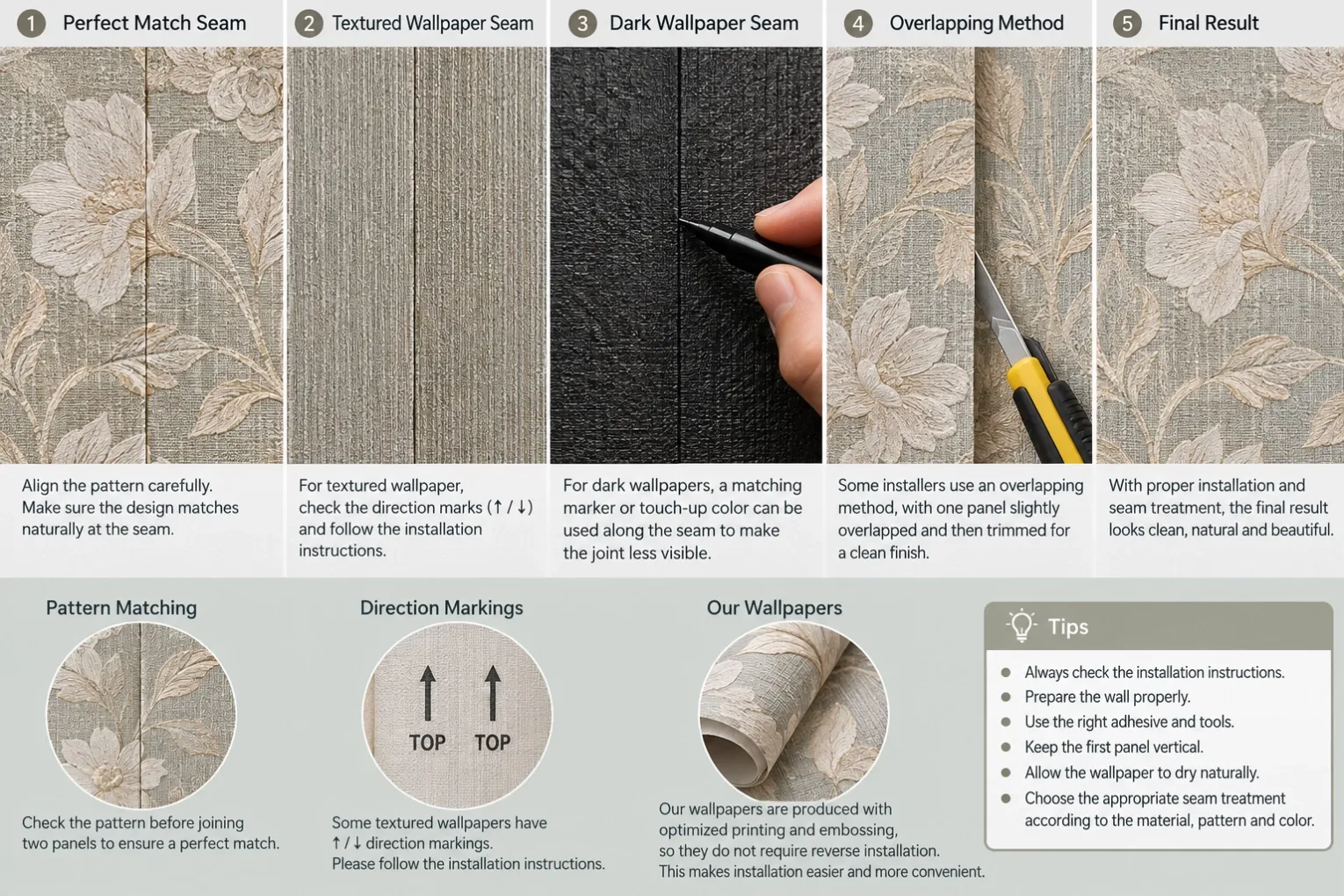
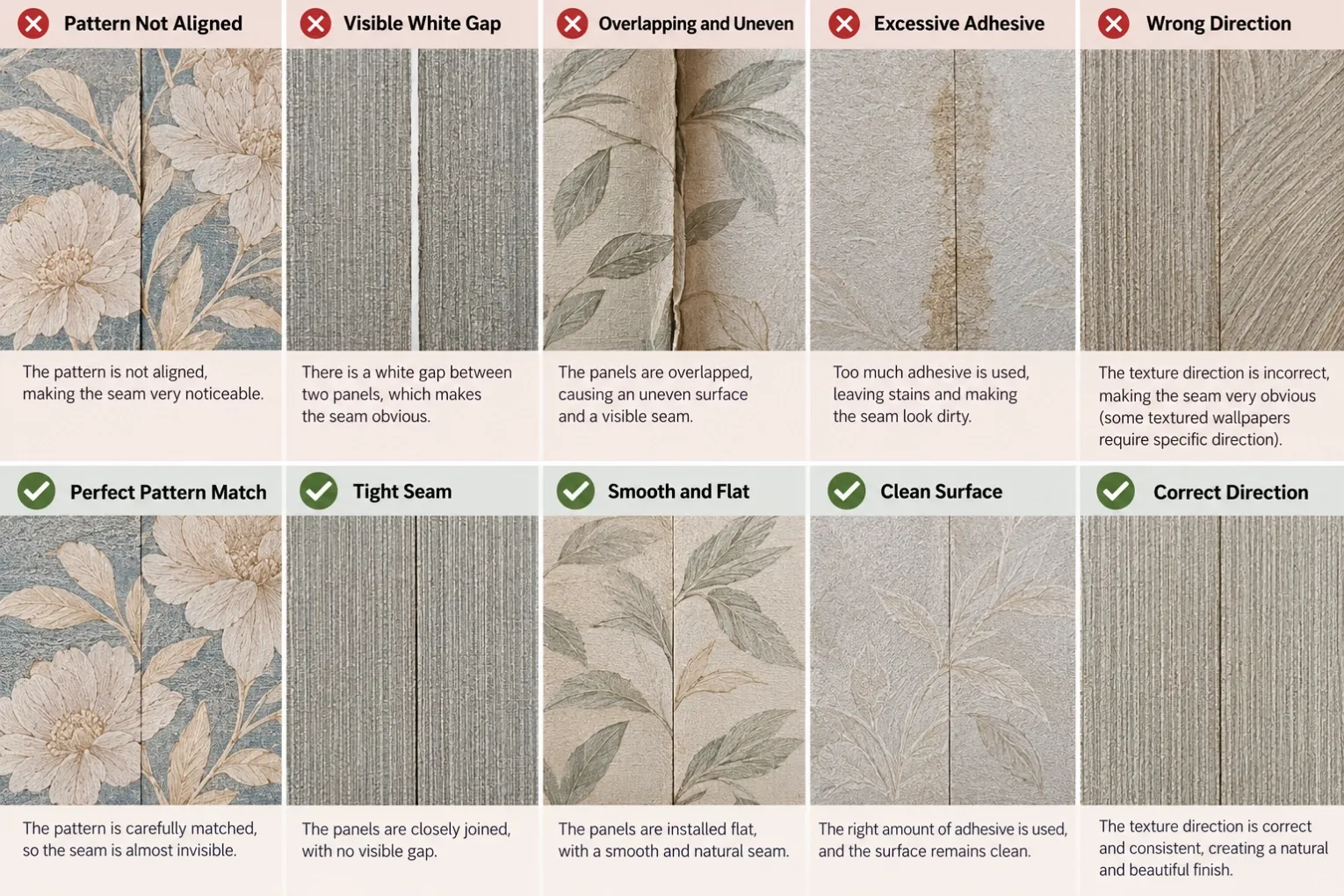
4. Match the Pattern Before Joining the Panels
For patterned wallpaper, always check the pattern before joining two panels together.
Large floral patterns, geometric designs and other repeat patterns may require careful alignment. Take the time to compare the design at the seam before applying pressure.
A few extra minutes of preparation can make a big difference to the final appearance.
5. Pay Attention to the Direction of Textured Wallpaper
Some textured wallpapers have ↑ / ↓ direction markings on the back.
These markings indicate the recommended installation direction. Certain textured wallpapers may need to be installed in alternating or reverse directions to achieve a consistent visual effect.
Always check the installation instructions before installation.
For our wallpapers, this issue has already been considered during the production process. We have optimized the production and printing process so that our wallpapers do not require reverse installation, making the installation process easier and more convenient for professional installers.
6. Seam Treatment Is an Important Detail
The seams are one of the most important details in wallpaper installation.
Different wallpapers may require different seam treatment methods depending on the material, pattern, texture and color.
For most wallpapers, the edges should be carefully aligned without excessive stretching. The installer should also avoid pressing too aggressively, especially on wallpapers with delicate textures, metallic finishes or embossed surfaces.
7. A Simple Trick for Dark Wallpapers
Dark textured wallpapers, especially those with a black or very dark background, can sometimes make small light-colored gaps at the seam more noticeable.
Some experienced installers use a simple technique: they carefully apply a matching black marker or touch-up color along the edge of the seam.
When done carefully and with a suitable color, this can make the seam much less visible and create a cleaner overall appearance.
This is a small detail, but sometimes small details make a big difference.
8. Overlapping Can Also Be Used
Some professional installers use an overlapping installation method to deal with seams.
Instead of trying to make two edges meet perfectly, one panel is slightly overlapped over the other, and the overlapping section is then carefully trimmed.
This method can be useful for certain wallpaper materials and installation conditions. However, the appropriate method should always be selected according to the specific wallpaper and the installer's experience.
9. Do Not Dry the Wallpaper Too Quickly
After installation, avoid strong airflow, excessive ventilation or direct sunlight.
Wallpaper should be allowed to dry naturally and gradually. Drying too quickly can sometimes cause excessive shrinkage and make seams more noticeable.
A stable environment during the drying process can help achieve a better final result.
10. Use the Right Adhesive and Tools
Different wallpaper materials may have different requirements for adhesive and installation tools.
Use an appropriate adhesive and follow the manufacturer's recommendations.
For delicate, textured or embossed wallpapers, use suitable tools and avoid excessive pressure that could damage the surface.
Professional Installation Makes Good Wallpaper Look Even Better
Wallpaper installation is not simply about putting wallpaper on a wall.
It is about understanding the material, pattern, texture, direction and seam treatment.
A professional installer knows that different wallpapers require different techniques. At the same time, a good wallpaper manufacturer should consider installation during the production process.
That is why we pay attention not only to pattern, color and texture, but also to the practical needs of installers.
From production to installation, every small detail matters.
Good wallpaper deserves good installation. And good installation brings the design to life.